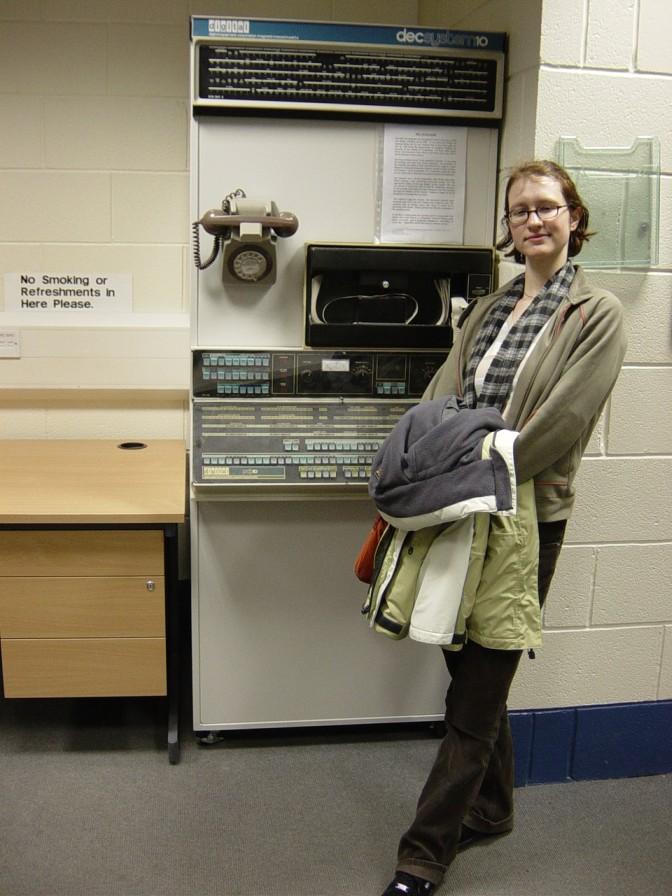
Cam in front of the PDP-10:

And Part 2 of the writeup:


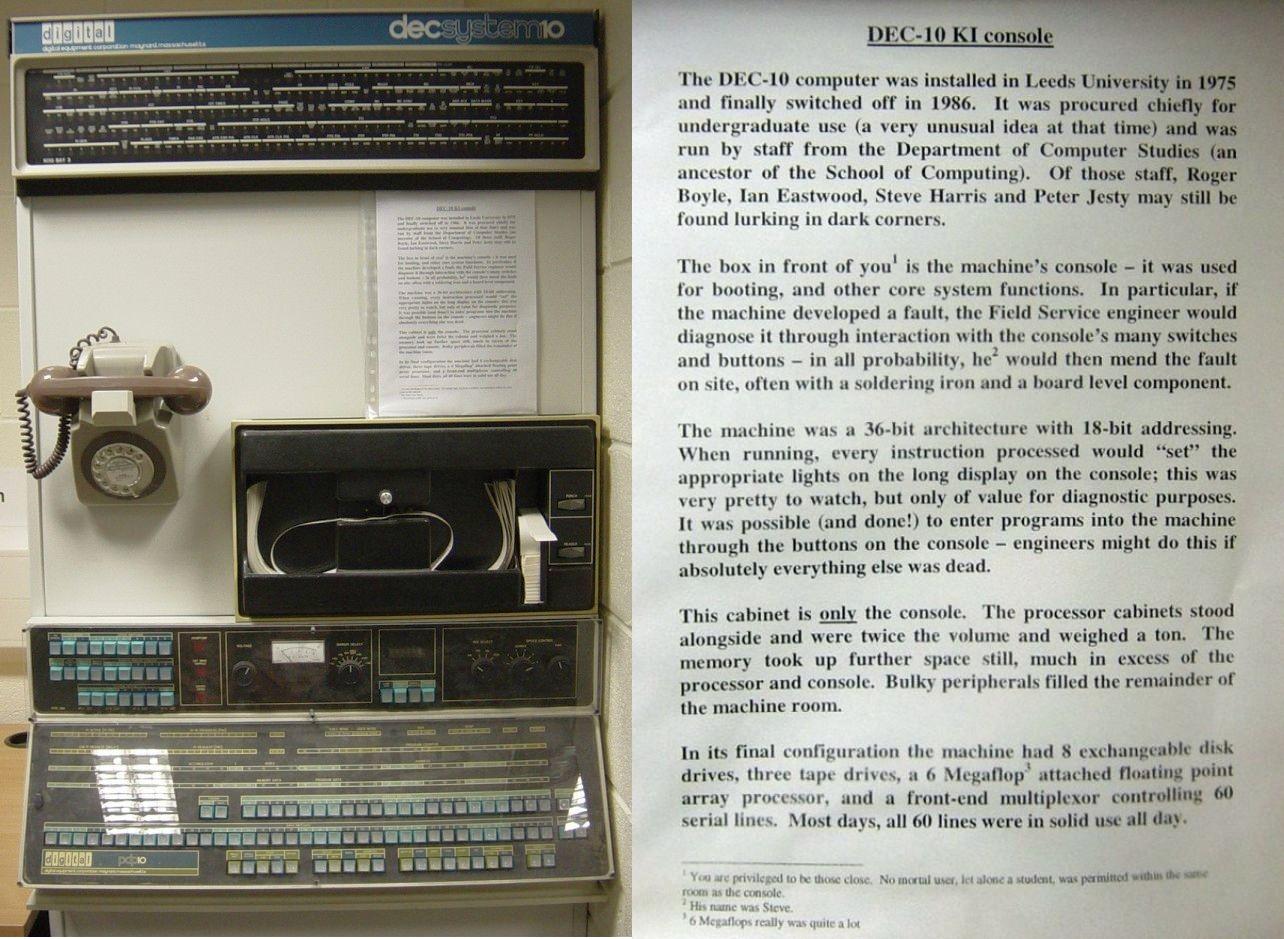
This cabinet is only the console. The processor cabinets stood alongside and were twice the volume and weighed a ton. The memory took up further space still, much in excess of the processor and console. Bulky peripherals filled the remainder of the machine room.

In its final configuration the machine had 8 exchangeable disk drives, three tape drives, a 6 Megaflop(3) attached floating point array processor, and a front-end multiplexor controlling 60 serial lines. Most days, all 60 lines were in solid use all day.

(1) You are very privileged to be this close. No mortal user, let alone a student was permitted within the same room as the console.

(2) His name was Steve.

(3) Megaflops really was quite a lot.
Cam in front of the PDP-10: And Part 2 of the writeup: This cabinet is only the console. The processor cabinets stood alongside and were twice the volume and weighed a ton. The memory took up further space still, much in excess of the processor and console. Bulky peripherals filled the remainder of the machine room. In its final configuration the machine had 8 exchangeable disk drives, three tape drives, a 6 Megaflop(3) attached floating point array processor, and a front-end multiplexor controlling 60 serial lines. Most days, all 60 lines were in solid use all day. (1) You are very privileged to be this close. No mortal user, let alone a student was permitted within the same room as the console. (2) His name was Steve. (3) Megaflops really was quite a lot.
Part 1 (Part 2 on next pic):

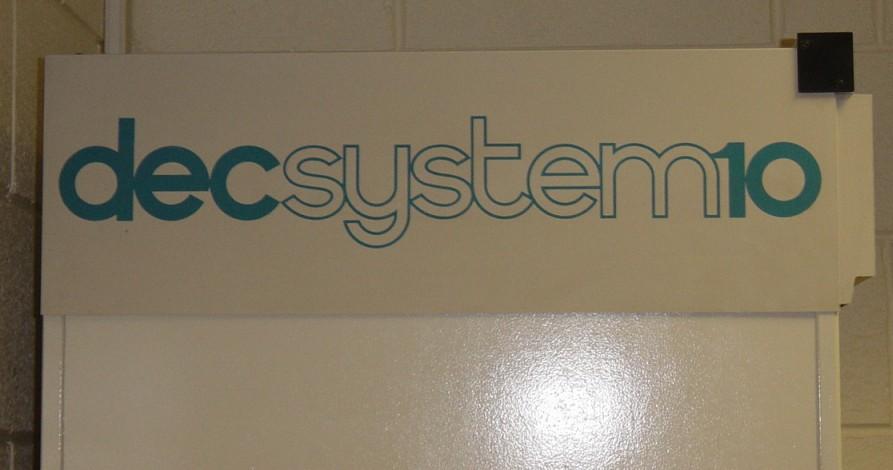
An old DEC System 10 console. 

Since Mastodon can't do the image recognition - I have to type this.

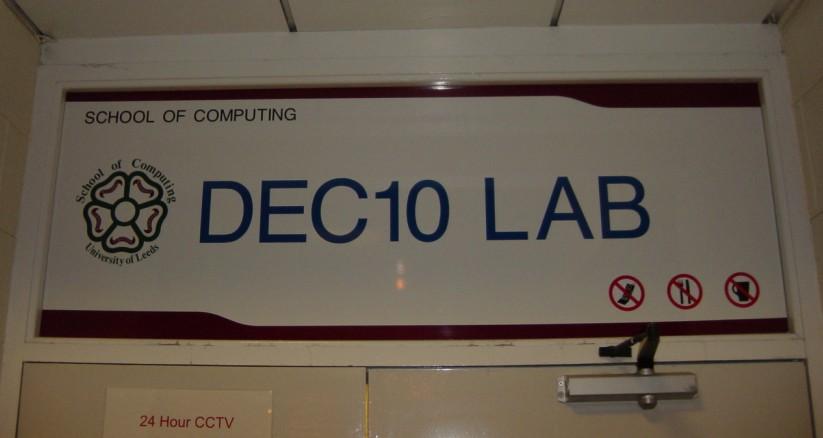
The DEC-10 computer was installed in Leeds University in 1975 and finally switched off in 1986. It was procured chiefly for undergraduate use (a very unusual idea at that time) and was run by staff from the Department of Computer Studies (an ancestor of the School of Computing). Of those staff, Roger Boyle, Ian Eastwood, Steve Harris and Peter Jesty may still be found lurking in dark corners.

The box in front of you(1) is the machine’s console ~ it was used for booting, and other core system functions. In particular, if the machine developed a fault, the Field Service engineer would diagnose it through interaction with the console’s many switches and buttons — in all probability, he(2) would then mend the fault on site, often with a soldering iron and a board level component.

The machine was a 36-bit architecture with 18-bit addressing. When running, every instruction processed would “set” the appropriate lights on the long display on the console; this was very pretty to watch, but only of value for diagnostic purposes. It was possible (and done!) to enter programs into the machine through the buttons on the console — engineers might do this if absolutely everything else was dead.
Part 1 (Part 2 on next pic): An old DEC System 10 console. Since Mastodon can't do the image recognition - I have to type this. The DEC-10 computer was installed in Leeds University in 1975 and finally switched off in 1986. It was procured chiefly for undergraduate use (a very unusual idea at that time) and was run by staff from the Department of Computer Studies (an ancestor of the School of Computing). Of those staff, Roger Boyle, Ian Eastwood, Steve Harris and Peter Jesty may still be found lurking in dark corners. The box in front of you(1) is the machine’s console ~ it was used for booting, and other core system functions. In particular, if the machine developed a fault, the Field Service engineer would diagnose it through interaction with the console’s many switches and buttons — in all probability, he(2) would then mend the fault on site, often with a soldering iron and a board level component. The machine was a 36-bit architecture with 18-bit addressing. When running, every instruction processed would “set” the appropriate lights on the long display on the console; this was very pretty to watch, but only of value for diagnostic purposes. It was possible (and done!) to enter programs into the machine through the buttons on the console — engineers might do this if absolutely everything else was dead.
Cam in front of the PDP-10:

And Part 2 of the writeup:


This cabinet is only the console. The processor cabinets stood alongside and were twice the volume and weighed a ton. The memory took up further space still, much in excess of the processor and console. Bulky peripherals filled the remainder of the machine room.

In its final configuration the machine had 8 exchangeable disk drives, three tape drives, a 6 Megaflop(3) attached floating point array processor, and a front-end multiplexor controlling 60 serial lines. Most days, all 60 lines were in solid use all day.

(1) You are very privileged to be this close. No mortal user, let alone a student was permitted within the same room as the console.

(2) His name was Steve.

(3) Megaflops really was quite a lot.
Cam in front of the PDP-10: And Part 2 of the writeup: This cabinet is only the console. The processor cabinets stood alongside and were twice the volume and weighed a ton. The memory took up further space still, much in excess of the processor and console. Bulky peripherals filled the remainder of the machine room. In its final configuration the machine had 8 exchangeable disk drives, three tape drives, a 6 Megaflop(3) attached floating point array processor, and a front-end multiplexor controlling 60 serial lines. Most days, all 60 lines were in solid use all day. (1) You are very privileged to be this close. No mortal user, let alone a student was permitted within the same room as the console. (2) His name was Steve. (3) Megaflops really was quite a lot.
Part 1 (Part 2 on next pic):

An old DEC System 10 console. 

Since Mastodon can't do the image recognition - I have to type this.

The DEC-10 computer was installed in Leeds University in 1975 and finally switched off in 1986. It was procured chiefly for undergraduate use (a very unusual idea at that time) and was run by staff from the Department of Computer Studies (an ancestor of the School of Computing). Of those staff, Roger Boyle, Ian Eastwood, Steve Harris and Peter Jesty may still be found lurking in dark corners.

The box in front of you(1) is the machine’s console ~ it was used for booting, and other core system functions. In particular, if the machine developed a fault, the Field Service engineer would diagnose it through interaction with the console’s many switches and buttons — in all probability, he(2) would then mend the fault on site, often with a soldering iron and a board level component.

The machine was a 36-bit architecture with 18-bit addressing. When running, every instruction processed would “set” the appropriate lights on the long display on the console; this was very pretty to watch, but only of value for diagnostic purposes. It was possible (and done!) to enter programs into the machine through the buttons on the console — engineers might do this if absolutely everything else was dead.
Part 1 (Part 2 on next pic): An old DEC System 10 console. Since Mastodon can't do the image recognition - I have to type this. The DEC-10 computer was installed in Leeds University in 1975 and finally switched off in 1986. It was procured chiefly for undergraduate use (a very unusual idea at that time) and was run by staff from the Department of Computer Studies (an ancestor of the School of Computing). Of those staff, Roger Boyle, Ian Eastwood, Steve Harris and Peter Jesty may still be found lurking in dark corners. The box in front of you(1) is the machine’s console ~ it was used for booting, and other core system functions. In particular, if the machine developed a fault, the Field Service engineer would diagnose it through interaction with the console’s many switches and buttons — in all probability, he(2) would then mend the fault on site, often with a soldering iron and a board level component. The machine was a 36-bit architecture with 18-bit addressing. When running, every instruction processed would “set” the appropriate lights on the long display on the console; this was very pretty to watch, but only of value for diagnostic purposes. It was possible (and done!) to enter programs into the machine through the buttons on the console — engineers might do this if absolutely everything else was dead.