1/2 🧵
Reprocessed this JWST image of Jupiter and updated the Outer Planets composition in the thread. Rings everywhere!
Full size image: http://flic.kr/p/2rJRXeY
Credit: NASA/ESA/CSA/STScI/AndreaLuck
JWST NIRCAM 2022-06-28
Filter: F212, F3322W2-F323N
PI: John A. Stansberry
Proposal ID 1022
#Space #Astronomy #JWST #Jupiter #ESA #NASA #Astrodon #Solarocks
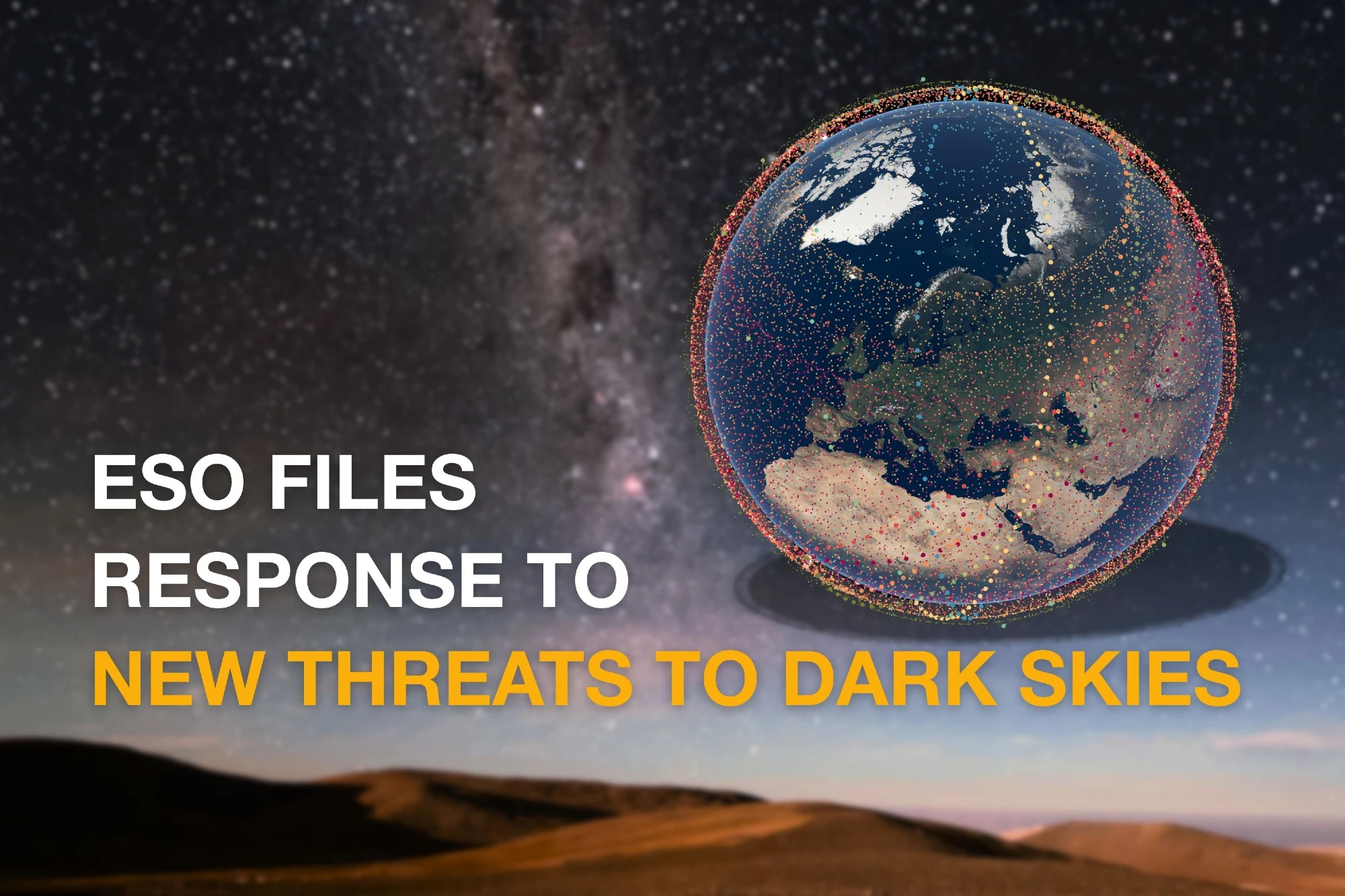
A @Nature paper published today argues that "Satellite megaconstellations will threaten space-based astronomy" https://www.nature.com/articles/s41586-025-09759-5
Here's the punchline of the paper: satellites could be a problem even for orbiting space telescopes, but the impact depends on how many are launched. "Our results show that if these constellations are completed, one-third of the images of the Hubble Space Telescope will be contaminated, while the SPHEREx (Spectro-Photometer for the History of the Universe, Epoch of Reionization and Ices Explorer), ARRAKIHS (Analysis of Resolved Remnants of Accreted galaxies as a Key Instrument for Halo Surveys) and Xuntian space telescopes will have more than 96% of +0.3 their exposures affected, with 5.6^+0.3_−0.3, 69^+21_−22, and 92^+11_−10 trails per exposure, respectively, with an average surface brightness of μ = 19 ± 2 mag arcsec−2."
A @Nature paper published today argues that "Satellite megaconstellations will threaten space-based astronomy" https://www.nature.com/articles/s41586-025-09759-5
Here's the punchline of the paper: satellites could be a problem even for orbiting space telescopes, but the impact depends on how many are launched. "Our results show that if these constellations are completed, one-third of the images of the Hubble Space Telescope will be contaminated, while the SPHEREx (Spectro-Photometer for the History of the Universe, Epoch of Reionization and Ices Explorer), ARRAKIHS (Analysis of Resolved Remnants of Accreted galaxies as a Key Instrument for Halo Surveys) and Xuntian space telescopes will have more than 96% of +0.3 their exposures affected, with 5.6^+0.3_−0.3, 69^+21_−22, and 92^+11_−10 trails per exposure, respectively, with an average surface brightness of μ = 19 ± 2 mag arcsec−2."
Eminent astronomers worldwide have written an open letter to the Chilean Government appealing for the protection of the dark skies above ESO's Paranal Observatory.
The site, the best place for astronomy on the planet, is currently threatened by the large-scale industrial complex INNA, from AES Andes company, planned to be located just a few kilometres from Paranal’s telescopes.
Read more: https://www.eso.org/public/announcements/ann25009/
#astronomy #astrophysics #space #science #environment
📷 J. C. Munoz Mateos
Eminent astronomers worldwide have written an open letter to the Chilean Government appealing for the protection of the dark skies above ESO's Paranal Observatory.
The site, the best place for astronomy on the planet, is currently threatened by the large-scale industrial complex INNA, from AES Andes company, planned to be located just a few kilometres from Paranal’s telescopes.
Read more: https://www.eso.org/public/announcements/ann25009/
#astronomy #astrophysics #space #science #environment
📷 J. C. Munoz Mateos
Plant (and Other Life) That Survived Outer Space for 280+ Days - YouTube
https://www.youtube.com/watch?v=uYL719BxyJA
Plant (and Other Life) That Survived Outer Space for 280+ Days - YouTube
https://www.youtube.com/watch?v=uYL719BxyJA